
- by Bellari
How Siding Protects Your Home's Structural Integrity

Ask most New Jersey homeowners what siding does, and you’re almost guaranteed to get the same answer: “It makes the house look good.”
That’s true, as far as it goes. Siding is the first thing visitors notice, and it does more than just about any other feature to set a home’s curb appeal.
But here’s the part that rarely comes up: While siding isn’t load-bearing (it doesn’t hold your house up), it protects everything that does. The framing, the sheathing, the insulation, and the connections that keep your home standing all sit behind it, and they’re counting on your home’s siding to do its job. Because when siding fails, the damage doesn’t stay on the surface for long.
Your Home's First Line of Defense
Think of siding as the outer layer of a system. Behind it sits a water-resistant barrier (the “house wrap” you see in the early stages of construction), flashing around windows and doors, and the wood or steel framing underneath. Together, these components form what builders call the building envelope: the shell that keeps weather out and comfortable air in.
Siding is the part of that shell that takes the hardest beating. Rain, snow, ice, wind, and sun all hit it first. A well-built system sheds that water and keeps the wall behind it dry. A poorly built or worn-out one lets moisture find its way in, quietly and patiently. Water is never in a hurry, and it doesn’t need to be.
Why Moisture Is the Real Enemy
Of everything siding protects against, moisture is the big one. Framing and sheathing that stay dry can last for generations. Wood that stays damp begins to soften, swell, and rot. Mold follows. So do wood-destroying insects, which are drawn to damaged wood (and New Jersey has no shortage of carpenter ants and termites).
The trouble is that this kind of damage is easy to miss. It usually starts behind the siding, out of sight, and by the time a stain or soft spot shows up on the surface, a good deal may have already happened underneath. That’s a bigger problem than a paint job. Compromised sheathing and framing can require serious repair work, and the cost climbs the longer it goes unnoticed.
Built for New Jersey Weather

Few places test a home’s exterior the way New Jersey does. Summers are hot and humid. Winters bring freezing temperatures and repeated freeze-thaw cycles. That’s when water that has slipped into a small gap turns to ice, expands, and pries that gap wider. Nor’easters, tropical storm remnants, and summer thunderstorms can drive rain sideways into walls in ways ordinary rainfall never would.
Well-installed siding is designed to handle all of this. It sheds water, resists wind, and stands up to the sun’s ultraviolet rays, which can fade and weaken lesser materials over time. It also adds a layer of protection against impact from branches, hail, and the occasional errant baseball.
Comfort and Efficiency Are Part of the Story
Structural protection isn’t only about storms. Siding, especially when paired with insulated backing or a properly sealed wall system, helps limit how much heat moves in and out of your home. A more stable wall means less strain on your heating and cooling, and fewer chances for condensation to form inside the wall cavity, which, once again, brings us back to moisture. (Most of the points in this blog post do!)
The result is a home that’s more comfortable, and a structure that stays healthier behind the scenes.
Why Installation Matters as Much as the Material
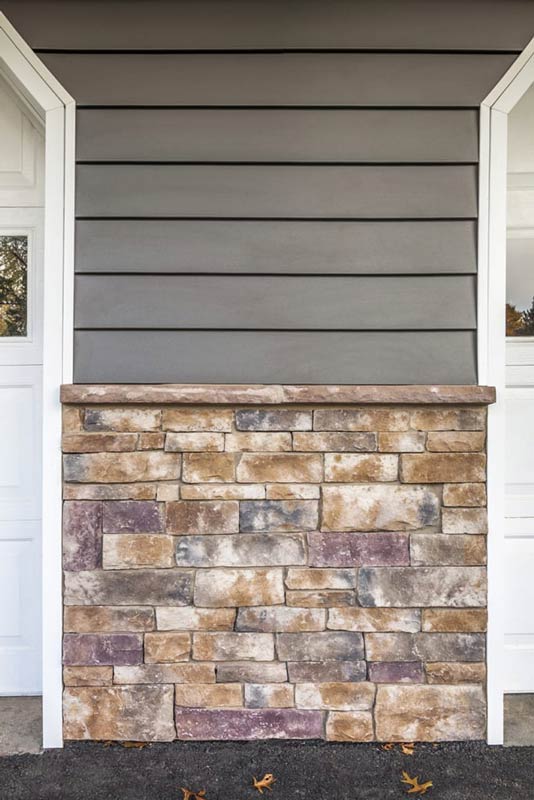
Vinyl, fiber cement, engineered wood, and insulated siding all have their strengths, and each can perform beautifully in New Jersey. Which one is best depends on your home, your budget, and your priorities. But the best product in the world can’t do its job if it’s installed poorly.
The details that matter most are the ones nobody sees once the job is done: a properly installed water-resistant barrier, correct flashing around windows, doors, and rooflines, fasteners driven to the right depth, and room for the siding to expand and contract with the temperature. Get these right, and the system works for decades. Get them wrong, and even premium siding can leak. That’s why experienced professionals matter so much on any exterior remodeling or renovation project.
Signs Your Siding May Need Attention
You don’t have to be an expert to spot early warning signs. Walk around your house once or twice a year and keep an eye out for:
- Cracked, warped, or loose panels
- Gaps at corners and seams
- Peeling paint or bubbling on wood siding
- Stains, mold, or mildew
- Spots that feel soft or spongy when pressed
- A creeping rise in your energy bills
If you notice any of these, don’t wait. A small repair now is almost always less expensive than a major one later, and a professional inspection can tell you whether you’re looking at a minor fix or a replacement.
More Than Curb Appeal
It’s easy to think of siding as a cosmetic upgrade. In reality, it’s one of the most important investments a homeowner can make in the long-term health of a house. Good siding doesn’t just look great on the day it’s installed. It quietly keeps the structure dry, sound, and comfortable for years, and nobody ever thanks it.
Because a home’s strength isn’t only in what holds it up. It’s also in what keeps the weather away from it.
Thinking about a siding renovation? With more than 75 years of home remodeling experience across New Jersey, Bellari helps homeowners protect and improve their homes with quality craftsmanship and materials built to last. Contact our team today to schedule a complimentary consultation and estimate. Call 908-895-6436 or visit bellarinj.com today.